
Foie Gras Truffé
Sous-vide duck foie gras terrine layered with fresh black truffle
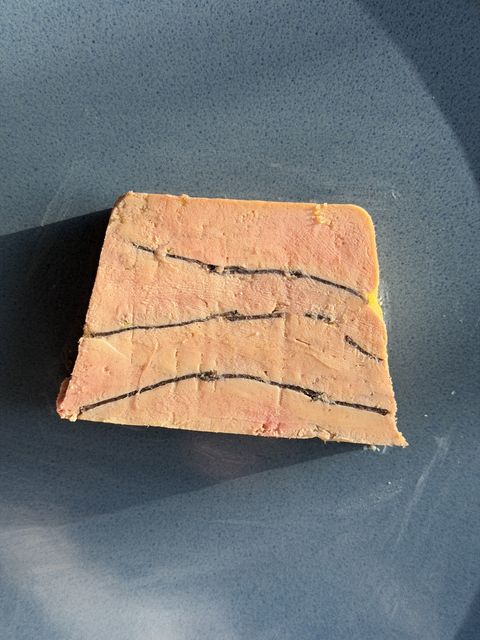
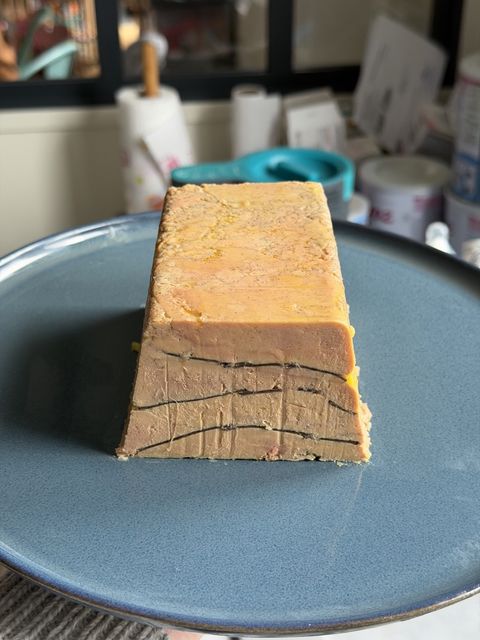
Terrine (1 kg foie gras)
- 1 kg raw duck foie gras (deveined)
- 12 g salt
- 3 g sugar
- 1 g pepper (white, preferably)
- 50 g cognac or armagnac
- 50 g truffle paste (optional)
- fresh black truffle + a truffle mandoline
A festive charcuterie centrepiece: duck foie gras cooked gently sous-vide, then layered with thinly shaved fresh black truffle and pressed into a terrine. The low temperature (56 °C) keeps the texture silky and limits the fat loss that ruins an over-baked terrine. Budget around €150 — roughly €80 of foie gras and €70 of truffle — for a terrine that stretches across two meals for six.
Method
Season
- Bring the foie gras to room temperature and devein it if it is not already cleaned. Season the lobes evenly with the salt, sugar, and white pepper, then the alcohol. Work in the truffle paste now if using.
Cook — low-temperature sous-vide
- Lay the foie gras flat in a vacuum bag and seal it.
- Submerge the bag in a pot of water, with a weight on top to keep it fully under.
- Cook at 56 °C for 45 minutes.
Assemble the terrine
- Line a terrine mould perfectly with parchment paper so it will unmould cleanly.
- Have the truffle paste, fresh truffle, and mandoline ready.
- Open the cooking bag over a strainer set in a wide container, to catch the rendered fat.
- Build successive layers — foie gras, shaved truffle, foie gras — shaving the truffle thinly over each layer.
Press & rest
- Cover, set a press (a weight) on top, and refrigerate at least 24 hours before slicing.
Keep the strained foie gras fat — it is gold for other dishes (sautéed potatoes and the like).
Background
Cooking foie gras at 56 °C rather than in a hot oven is the key to a terrine that stays rosy, silky, and dense instead of grainy and swimming in rendered fat. The gentle heat sets the proteins without violently forcing out the fat, so you lose far less of the (expensive) liver.
The truffle is layered raw and shaved thin — its aroma perfumes the fat during the 24-hour press without being cooked away. Fresh black truffle is worth it here; the optional truffle paste seasons the foie gras itself for a deeper, more even truffle note.
The 24-hour press under a weight compacts the layers so the terrine slices cleanly and the truffle seams read as neat lines through the block.
Mistakes I've Made
- Cooking too hot. A terrine baked hot renders out huge amounts of fat and turns grainy. Hold 56 °C — low and slow keeps it silky.
- Skipping the press. Without a weighted press the layers don't bond and the terrine crumbles when sliced. Press at least 24 hours.
- Slicing warm. Chill the terrine fully before slicing, and dip the knife in hot water between cuts for clean slices.
Sources
- Foie Gras Truffé à 5° —
- Foie gras de canard —
- Foie gras truffé (video) —